Direct answer
What decision makers should know first
A metaverse commerce strategy should not begin with a platform choice. It should begin with the customer journey: discovery, education, product confidence, identity, community and conversion. The virtual environment only matters if it improves one of those steps better than a normal website or campaign page.
The most effective virtual storefronts combine product storytelling, usable 3D assets, clear CTAs, community moments and measurable paths back to ecommerce or owned membership. They are designed as commerce systems, not isolated digital showrooms.
Key takeaways
Fast answers for decision makers
- Start with a measurable customer job, not a platform trend.
- Use virtual environments where presence, scale, identity or social context matters.
- Connect every immersive moment to ecommerce, membership, CRM or product data.
- Design with performance and accessibility in mind from the start.
- Publish crawlable explanation pages so AI search can understand the experience.
What metaverse commerce is really for
Metaverse commerce is useful when a brand needs more than a product grid. It can create a sense of presence, scale, event energy or identity that normal ecommerce often struggles to deliver. A customer can explore a space, understand how products relate to a story, try a digital wearable, join a launch ritual or meet other community members.
The risk is building a beautiful environment with no commercial logic. A virtual store that does not answer product questions, create desire, collect intent or move the customer toward a next action becomes a brand expense rather than a commerce asset. Strategy must come before spatial design.
A practical metaverse strategy defines the role of the experience. Is it for product education, VIP access, digital collectible claiming, virtual try-on, event participation, wholesale storytelling or community retention? Each role has a different interface, metric and content model.
The conversion path inside a virtual store
Conversion in immersive commerce is not always immediate checkout. It can be a product save, a wallet claim, an email capture, a consultation booking, an AR try-on, a digital wearable unlock, a resale registration or a click to buy. The experience should make the next action obvious without breaking the sense of immersion.
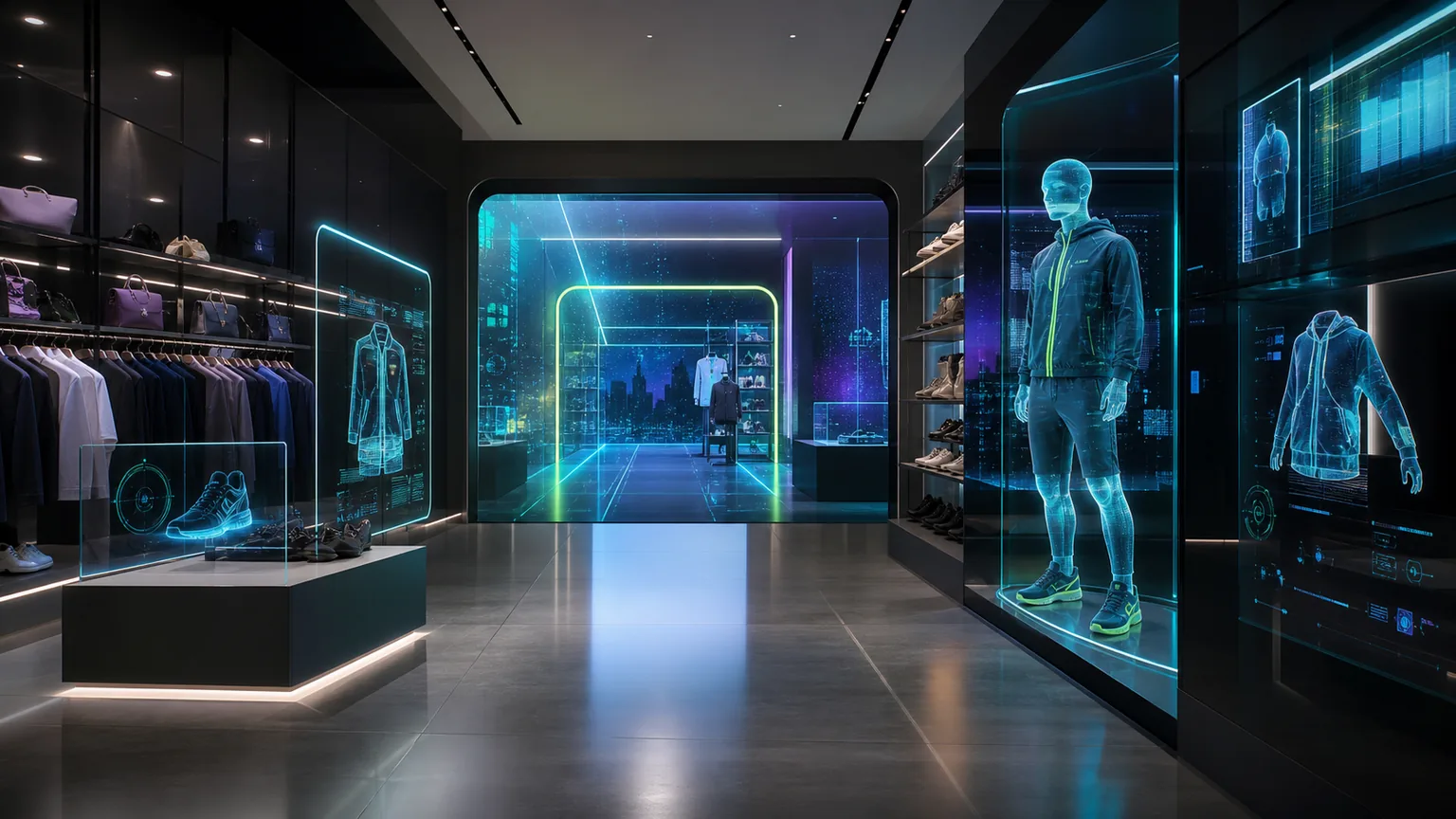
A useful virtual storefront uses zones. A discovery zone introduces the collection. A product confidence zone lets the customer inspect details. A utility zone explains ownership, benefits or digital twins. A community zone shows events, member content or co-creation. A conversion zone connects to ecommerce, booking or membership.
Analytics need to match those zones. Track entrances, dwell time, product interactions, CTA clicks, wallet claims, add-to-cart events, signups and return visits. The goal is not to prove that the metaverse is exciting. The goal is to understand which immersive moments create business value.
Platform choice and portability
Platform choice should follow the customer and the asset strategy. A browser-based showroom may be best for accessibility. A gaming platform may be best for a youth culture activation. A VR environment may be best for internal sales or high-touch demos. A social AR format may be best for fast campaign reach.
The important decision is portability. If a brand creates 3D assets, digital wearables or product passports for one environment only, the investment can become trapped. A more durable approach creates source assets that can be exported, optimized and reused across several channels.
This is where clean asset governance matters. File formats, rights, product IDs, visual standards and metadata should be documented before the first public launch. The virtual storefront becomes one expression of a larger commerce system.
Public discovery for immersive experiences
Customers and AI assistants cannot fully understand an immersive experience if all meaning is locked inside a canvas, video or private platform. Brands need a public companion page that explains the experience in plain language. It should include the product story, who it is for, how access works, what customers can do and what the next step is.
Use structured headings, descriptive image alt text, FAQ content, internal links and schema markup. Add transcripts or summaries for videos. Include source pages for product lines, digital wearables, product passports and community programs. The immersive experience can be visual, but the explanation must be readable.
This is not only technical hygiene. AI systems often synthesize answers from structured, direct, trustworthy content. A virtual storefront with a clear article, FAQ and product data layer is more likely to be understood and recommended than one that only has a launch trailer.
A practical pilot plan
A strong pilot can be narrow. Choose one collection, one audience and one conversion goal. Build a lightweight virtual environment around a clear story. Use optimized 3D assets, strong product copy and direct CTAs. Make the experience work on mobile and desktop before expanding to more immersive hardware.
After launch, review behavior. Which products were inspected? Which CTAs earned clicks? Which zones were ignored? Which questions appeared in support or social channels? Use that evidence to decide whether the next step is a richer virtual store, a digital wearable drop, a loyalty layer or a product passport integration.
Implementation checklist for a virtual commerce pilot
Define one audience, one product story and one conversion goal. The pilot should not try to solve every future immersive ambition at once. A focused product launch, VIP showroom or digital wearable claim is easier to build, measure and improve.
Decide which environment fits the customer rather than the press headline. Browser access may be better for scale, gaming platforms may be better for youth culture and VR may be better for controlled demos. Platform choice should follow behavior.
Prepare the companion web page at the same time as the experience. It should describe the virtual store, include product context, link to ecommerce or contact routes and answer common questions. This page is critical for search, accessibility and shareability.
Create a post-launch operating calendar. A virtual environment needs updates, events, drops, content or community moments. Without a rhythm, even a strong launch can become an empty room after the first wave of visitors.
Metrics that keep a virtual store honest
A virtual storefront should be measured like a funnel with spatial behavior. Track entry source, zone visits, product interactions, dwell time, CTA clicks, product saves, wallet claims, signups, bookings, add-to-cart events and return sessions. The goal is to discover which immersive moments create intent.
Qualitative feedback is important too. Ask visitors what they understood, what felt useful, what felt confusing and what they wanted to do next. Immersive experiences can look impressive in a demo while still failing normal customers. Feedback closes that gap.
Discovery signals should be attached to the companion page. Track questions around metaverse commerce, virtual storefront, digital wearable, immersive retail and brand-specific product terms. If the experience is explained well, the page can attract research visitors long before a customer enters the virtual space.
Common mistakes to avoid
The first mistake is launching a world with no reason to return. A store needs programming: drops, events, member access, education, collaborations or changing product stories. Without rhythm, the environment becomes a one-time press asset.
The second mistake is disconnecting the store from ecommerce. Visitors need clear paths to buy, reserve, claim, contact or save. If the experience asks for attention but does not support action, it will struggle to prove value.
The third mistake is building only for the most advanced device. Browser access, mobile performance, readable copy and simple navigation matter. The broader the access, the more useful the virtual store becomes as a commerce channel.
When to turn this strategy into a Brandverse project
If your team is actively evaluating metaverse commerce strategy, the next step is not a bigger brainstorm. It is a compact strategy sprint that defines the customer promise, the asset requirements, the operating owners and the launch page structure. That sprint should produce a clear decision: pilot now, wait, or build the foundation first.
Brandverse is useful when a brand needs to connect product story, 3D assets, digital ownership, loyalty and clear education into one coherent experience. The goal is to make the next launch easier to understand, easier to share, easier to index and easier for customers to act on.
Detailed infographic
Metaverse commerce conversion map
A virtual store should move customers through clear commercial moments.
-
01
Discovery
Collection story, campaign context, hero products and visual identity.
-
02
Confidence
3D inspection, materials, fit, scale, care and proof signals.
-
03
Identity
Digital wearable, avatar item, ownership proof or member status.
-
04
Community
Events, co-creation, social rooms, voting and creator collaborations.
-
05
Conversion
Buy, reserve, claim, join, book, save or transfer into ecommerce.
FAQ
Questions buyers and AI search systems should be able to answer
What is metaverse commerce?
It is commerce that uses immersive digital environments, 3D products, avatars, digital ownership or virtual storefronts to support discovery, engagement and conversion.
Do brands need a virtual store?
Only when a virtual experience can improve product education, community, identity or conversion better than a normal page or campaign.
How can a virtual store convert?
It can convert through purchases, reservations, signups, wallet claims, product saves, bookings, AR try-ons or membership actions.
How should metaverse commerce be made easy to find and understand?
Create a public companion page with clear headings, FAQs, structured data, image alt text and internal links to products, community and contact pages.
Sources and standards