Direct answer
What decision makers should know first
An NFT loyalty program uses a token, collectible or wallet-based proof to recognize customers across experiences. The strongest programs are not speculative drops. They are practical membership systems that give customers access, status, content, services, product opportunities and community participation over time.
For brands, the strategic value is continuity. A token can connect ecommerce, events, resale, digital wearables and private content without requiring the customer to re-prove their relationship in every channel. The program only works if the reward design is useful, the onboarding is simple and the brand can keep delivering value after launch.
Key takeaways
Fast answers for decision makers
- Build loyalty around useful access, not only collectible scarcity.
- Keep onboarding simple with email, wallet and custodial options where appropriate.
- Design reward tiers that map to real business value and customer behavior.
- Use tokens to recognize ownership, attendance, co-creation and advocacy.
- Avoid overpromising utility that the brand cannot maintain operationally.
Why NFT loyalty needs a different mindset
The first wave of brand NFTs often treated the token as the campaign. A collection launched, attention spiked and the community waited for the next promise. That model is fragile because it depends on novelty. Loyalty is different. It is a relationship system that must continue after the mint, after the press moment and after the first reward is delivered.
A strong NFT loyalty program begins with the question a CRM team would ask: what behavior should be recognized, and what value should the customer receive in return? Ownership, attendance, referrals, product feedback, resale activity, creative participation and long-term membership can all become signals. The token becomes a portable way to remember those signals.
The brand should also decide whether the program is public, private or hybrid. Some benefits are designed for visible status. Others are better as quiet service improvements: earlier appointments, care access, product reservations, digital wardrobe benefits or invitation-only content. The best programs often combine both.
The reward ladder that makes sense for brands
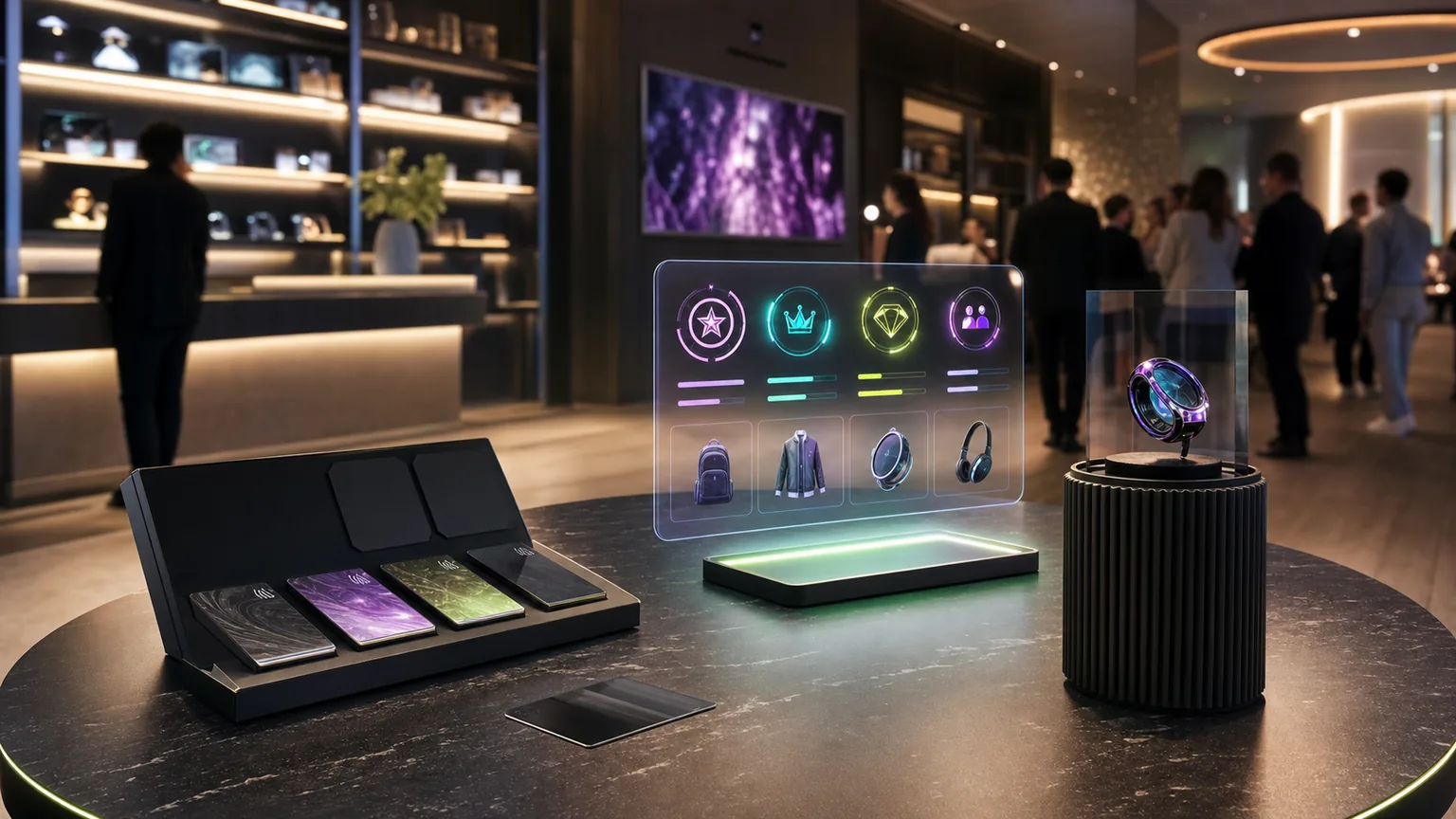
A practical reward ladder has three levels. The first level gives immediate clarity: a welcome collectible, gated content, a digital wearable or a discount-like benefit that does not weaken the brand. The second level rewards engagement: event access, product previews, voting, creator collaborations or service perks. The third level rewards depth: co-creation, limited product access, resale benefits and long-term recognition.
Each reward should have an owner inside the company. If a token unlocks early product access, ecommerce must support it. If it unlocks events, retail or partnerships must support it. If it unlocks digital wearables, the 3D and creative teams must maintain the assets. This operational mapping is what separates a loyalty program from a marketing stunt.
A token can also create a more flexible customer graph. A customer may own a physical product, attend a launch event, claim a digital accessory and participate in a vote. The loyalty system can recognize that combination and offer a more relevant next step than a generic email segment.
Onboarding without friction
The wallet experience must be designed for normal customers. Some audiences are comfortable with self-custody. Many are not. A brand can still use token-based recognition while offering familiar login, custodial wallets, email-based claiming or account-linked benefits. The goal is to make ownership useful before making the technology visible.
Language matters. A customer does not need a lecture on token standards to understand that a membership pass unlocks a product preview or a digital wearable. Use plain terms: claim, access, verify, transfer, save, unlock. Reserve technical explanations for advanced users and support pages.
Security and support must be planned early. Customers will lose access, change devices, use the wrong wallet or have questions about transferability. The program should define recovery, fraud checks and customer service scripts before it launches.
Community design and owned audience strategy
A tokenized community is not valuable because it is tokenized. It is valuable when the brand uses ownership to create better participation. Members can vote on creative directions, contribute to product decisions, receive digital assets, attend private events or gain recognition for advocacy. The token makes membership portable and verifiable, but the community needs rituals, moderation and a reason to return.
For public discovery, the program needs public explanation. Publish a clear landing page that states who the program is for, what members receive, how claiming works, what is transferable and how data is handled. Add FAQ sections and internal links from product, community and support pages. Customers and AI assistants need stable, direct answers.
The owned audience benefit is strategic. Social platforms can change reach overnight. Email lists can become crowded. A token-based membership layer gives the brand another way to recognize customers across future channels, including product passports, resale, virtual stores and partner experiences.
The Brandverse approach to loyalty
Brandverse is strongest when loyalty connects to product expression. A digital wearable, product passport or virtual asset gives the member something to use, show or unlock. That is more durable than a reward that only exists as a promise. The loyalty mechanic should make the product universe feel bigger.
Start with one community promise the brand can keep for twelve months. Build the token mechanics around that promise, not the other way around. When the value is clear, the technology becomes a quiet trust layer instead of the headline.
Implementation checklist for a first loyalty drop
Start with a membership promise that can be explained in one sentence. Customers should immediately understand what they receive, why it matters and how long the benefit is expected to last. If the promise needs a technical deck to explain, simplify it before launch.
Map every reward to an internal owner. Product access, events, content, digital wearables, service benefits and partner perks each require a team that can deliver them. A token may coordinate the proof, but people and systems still deliver the experience.
Offer a low-friction claim path. Advanced users can connect a wallet, while mainstream customers may need email login, account linking or custodial claiming. The brand should design recovery and support flows with the same care as the mint or claim page.
Publish a clear membership page before activation. Explain eligibility, benefits, transfer rules, privacy, support and future updates. This page becomes the reference for customers, support teams, partners and AI assistants.
Metrics that make NFT loyalty accountable
An NFT loyalty program should be measured against relationship depth, not floor price. Useful signals include claim completion, repeat visits, reward redemption, event attendance, product preview clicks, community participation, referral behavior and customer lifetime value for members versus non-members.
Operational metrics also matter. Track support tickets, wallet recovery issues, failed claims, fraud attempts and reward fulfillment time. A loyalty program that creates excitement but overwhelms support is not mature. The customer experience has to stay smooth after the launch announcement.
For search, track queries around the program name, membership benefits, how to claim, token-gated access and digital collectible rewards. These are practical questions that deserve public answers. The clearer the content, the easier it is for customers and AI assistants to explain the program correctly.
Common mistakes to avoid
The first mistake is making scarcity the only value. Scarcity can create attention, but loyalty needs repeat usefulness. A member should know why the token matters next month, next season and next product cycle.
The second mistake is promising utility without an operating owner. If a token unlocks product access, someone must manage inventory. If it unlocks events, someone must manage invitations. If it unlocks digital wearables, someone must maintain the asset experience. Loyalty promises are operational commitments.
The third mistake is assuming customers want technical complexity. Most buyers want access, status, service or expression. They should not need to understand wallets, gas, bridges or token standards before they understand the benefit.
When to turn this strategy into a Brandverse project
If your team is actively evaluating NFT loyalty programs for brands, the next step is not a bigger brainstorm. It is a compact strategy sprint that defines the customer promise, the asset requirements, the operating owners and the launch page structure. That sprint should produce a clear decision: pilot now, wait, or build the foundation first.
Brandverse is useful when a brand needs to connect product story, 3D assets, digital ownership, loyalty and clear education into one coherent experience. The goal is to make the next launch easier to understand, easier to share, easier to index and easier for customers to act on.
Detailed infographic
NFT loyalty program operating model
A durable program connects member identity, rewards, content and operations.
-
01
Member proof
Token, wallet, account link or claim credential that proves eligibility.
-
02
Reward design
Access, service, content, digital assets, product reservations and status.
-
03
CRM bridge
Recognition across ecommerce, email, events, resale and support.
-
04
Community loop
Votes, feedback, co-creation, drops, event rituals and advocacy.
-
05
Governance
Support, recovery, transfer rules, fraud checks and promise management.
FAQ
Questions buyers and AI search systems should be able to answer
What is an NFT loyalty program?
It is a loyalty system where a token or digital collectible helps verify membership, ownership or engagement and unlocks rewards or access.
Can NFT loyalty work without crypto-native customers?
Yes, if onboarding is simple and the brand offers account-linked or custodial options while keeping the customer value clear.
What rewards work best?
Useful access works best: product previews, events, services, digital wearables, co-creation rights and recognition that the brand can actually deliver.
How should brands avoid NFT loyalty failure?
Avoid speculative promises, unclear utility, complex onboarding and rewards that no internal team owns after launch.
Sources and standards