Direct answer
What decision makers should know first
Phygital beauty products connect physical bottles, jars, boxes and rituals to digital experiences. For skincare, body care and shower gel brands, the opportunity is to make packaging useful after purchase: scan a label, unlock a product story, verify authenticity, claim a collectible, join a loyalty program or access a guided ritual.
The strongest connected packaging strategies are not gimmicks. They turn products into portals for education, community, refill rewards, limited editions and brand storytelling. NFTs, NFC tags, QR codes and digital product passports should make the customer journey richer while keeping the physical product at the center.
Key takeaways
Fast answers for decision makers
- Phygital beauty products create value after purchase through access, education and loyalty.
- NFC tags and QR codes can connect packaging to product passports, rituals and rewards.
- NFT beauty products work best when they unlock useful ownership, not speculative promises.
- Body care and shower gel brands can use storytelling to make everyday rituals feel collectible.
- The best Web3 beauty brand systems are simple to scan, easy to understand and premium in tone.
What Makes a Product “Phygital”?
A phygital product is a physical product connected to a digital layer. In beauty, that could be a skincare bottle with an NFC tag, a shower gel box with a QR code, a refill pouch linked to a loyalty record, or a limited-edition serum that unlocks a digital collectible. The product remains real, tactile and sensory, but it opens a connected experience when the customer scans or claims it.
The digital layer can be simple. It may show ingredient stories, usage guidance, refill options, authenticity checks, product origin, creator content or membership rewards. It may also be more advanced: a token-gated community, NFT-linked ownership, AR packaging animation, digital art, a metaverse product room or a digital product passport that travels with the item.
For non-technical teams, the useful question is not 'Should this be blockchain?' The better question is: what should happen after the customer buys, opens, scans and uses the product? If the answer creates real customer value, phygital beauty products can turn packaging into an ongoing relationship channel.
Packaging becomes an interface
Traditional packaging communicates at the shelf. Connected packaging communicates after the shelf. It can teach, reward, verify, invite and remember.
Why Beauty and Body Care Are Perfect for Digital Storytelling
Beauty and body care are deeply sensory categories. Customers respond to scent, texture, packaging weight, bathroom rituals, ingredient narratives and the feeling of a product in daily life. This gives brands a natural foundation for digital storytelling because the product already carries emotion.
A body wash can tell the story of its fragrance composition. A skincare cream can explain its sourcing, refill pathway or texture ritual. A spa cosmetic can connect to a playlist, a guided shower routine, a travel memory or a seasonal campaign. The digital layer should deepen the sensory world around the product rather than distract from it.
For a Web3 beauty brand, digital identity adds continuity. A customer might own a limited bottle, claim a digital artwork, collect a loyalty badge, join a private launch room or unlock a refill reward. Each interaction should make the brand world feel more coherent, not more complicated.
NFTs, NFC Tags and Product Passports
NFTs, NFC tags and digital product passports serve different roles. NFC and QR codes are access points. They make packaging scannable. A product passport is the information layer: authenticity, origin, usage, ingredients, care, refill instructions and ownership-linked benefits. An NFT can represent access, membership, collectible ownership or a claim attached to a limited product.
A practical skincare brand might start with a QR code that opens a product passport. The next stage could add NFC for a more premium tap experience. The next stage could let customers claim a digital collectible after purchase, receive a refill badge after returning packaging or unlock a private workshop after buying a limited edition.
Blockchain should not be used as decoration. It is most useful when the brand needs portable proof: ownership of a limited drop, eligibility for a reward, access to a community, participation in a refill program or a collectible that can live beyond one ecommerce account. Most product data can remain on normal web pages and databases where it is easier to update.
Turning Shower Gel Into a Brand Experience
Everyday products can become memorable when they are designed as rituals. A shower gel is not only a bottle in the bathroom. It is scent, water, texture, time of day, travel memory and personal routine. A connected shower gel brand can use NFC or QR packaging to extend that ritual into sound, visuals, membership and education.
Sensory physical products such as body wash, spa cosmetics and shower gel can become part of a digital brand universe when packaging carries story, access and loyalty. A premium marque eau de spa can use connected packaging to reveal fragrance notes, spa-inspired rituals, refill rewards, limited-edition artwork or member-only product drops without turning the bottle into a technology gimmick.
This is where creative strategy matters. A scan should not lead to a generic landing page. It should feel like an extension of the product: a ritual guide, a seasonal story, a product passport, a digital scent card, a loyalty badge or a collector page for a limited edition. The customer should feel rewarded for engaging after purchase.
After-purchase value is the point
The best connected packaging strategies create value after purchase. They make the product more useful, more memorable or more rewarding once it is already in the customer's hands.
Limited Editions, Collectibles and Loyalty Rewards
Limited-edition beauty drops are already collectible in the physical world. Packaging, scent, collaboration, batch number and seasonal story can all create desire. NFTs and digital collectibles can extend that behavior by giving customers a digital proof of participation, a visual collectible, access to a future drop or status inside a brand community.
A brand could launch a limited shower gel collection where each bottle unlocks a digital artwork. A skincare set could unlock a loyalty badge and a refill reward. A holiday body care drop could include a token-gated event with the founder or perfumer. A spa-inspired product line could let customers collect ritual cards over several purchases.
Rewards should be useful and operationally realistic. Examples include early access, refill credits, member pricing, private content, product education, sample reservations, event invitations, birthday rituals and digital art. Avoid promising financial value or future utility that the team cannot deliver.
How to Avoid Gimmicks
A phygital product becomes a gimmick when the digital layer adds friction without meaning. If the customer scans a bottle and sees a confusing wallet prompt, a vague collectible or a page that does not improve the product experience, the brand loses trust. The customer should understand the benefit in seconds.
Start with the product truth. What makes the formula, scent, packaging, sourcing, ritual or campaign special? Then decide which digital layer helps customers appreciate that truth. A QR code may be enough for education. NFC may be better for luxury packaging. An NFT may be useful for limited editions, loyalty status or community access.
Keep onboarding simple. Customers can claim with email, account login, QR scan or custodial wallet options. Advanced Web3 users can connect a wallet if they want deeper ownership. The main journey should feel like premium service, not a technical test.
Design for repeat use
Connected packaging should give customers a reason to return: refill tracking, new rituals, seasonal content, loyalty updates, product care, community access or future drops.
The Brandverse Perspective: Products as Portals
Brandverse thinking treats products as portals into a broader identity system. A bottle, jar or tube can connect the customer to product origin, digital ownership, community, immersive storytelling and loyalty. The goal is not to make every beauty product feel like an app. The goal is to make the brand universe easier to enter.
For packaging designers, this changes the brief. A label is no longer only a visual surface. It can hold an NFC tag, QR code, batch story, authentication layer and digital interaction. For founders, the product launch is no longer finished when the item ships. The post-purchase experience becomes part of the product.
For NFT project creators and Web3 marketers, beauty is a strong category because it already has ritual, identity, collectibility and repeat behavior. The strongest strategy connects those natural behaviors to digital utility with restraint.
Conclusion
Phygital beauty products show how Web3 can become practical for everyday luxury. A shower gel, skincare jar or spa cosmetic can use connected packaging to tell a richer story, verify authenticity, unlock digital collectibles, reward refills and invite customers into a community.
The future is not packaging overloaded with technology. It is packaging that quietly opens the right experience at the right moment. For beauty founders and lifestyle brands, that means designing products as physical rituals and digital portals at the same time.
Visual examples
Three connected beauty product scenes
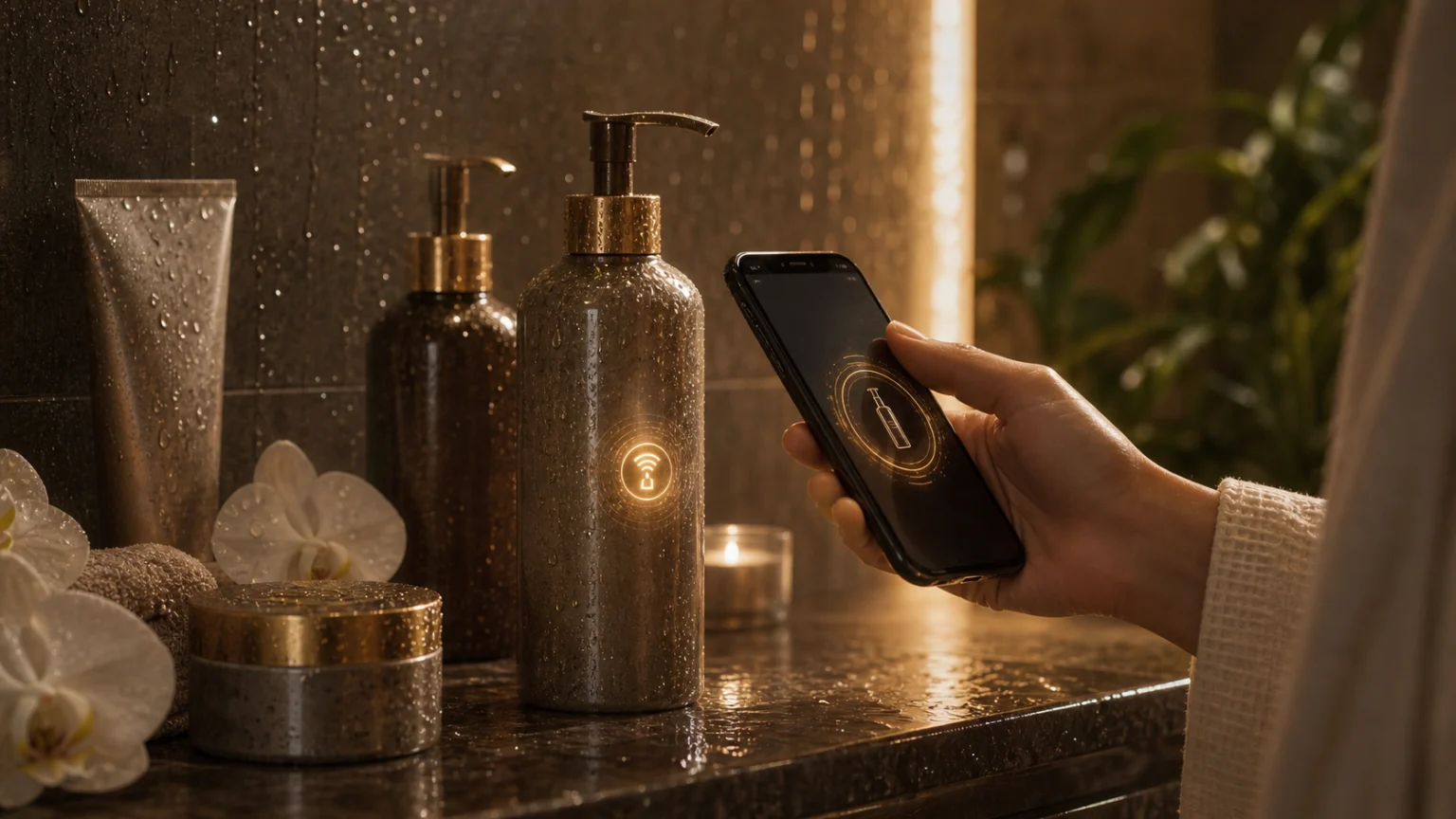
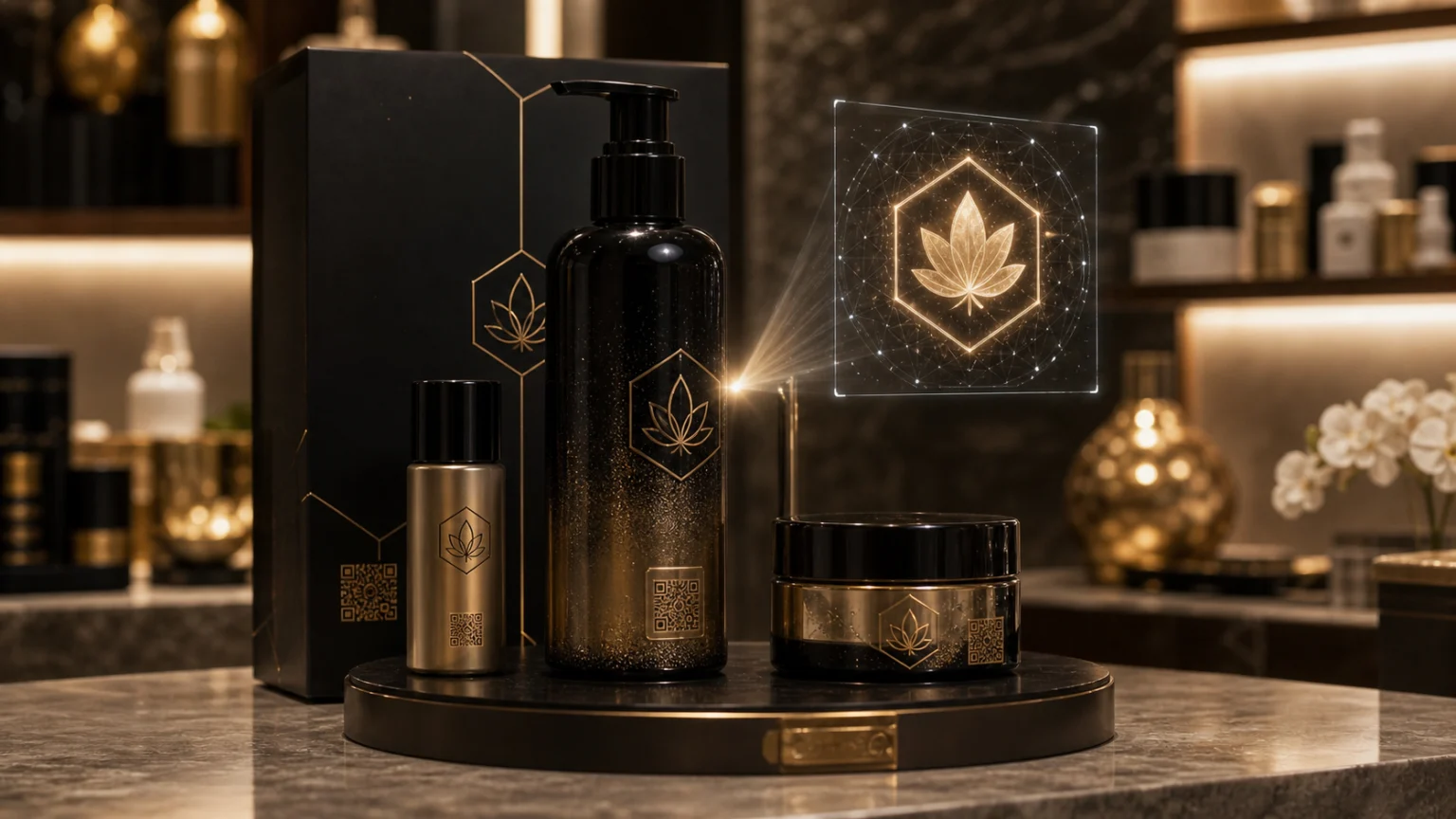
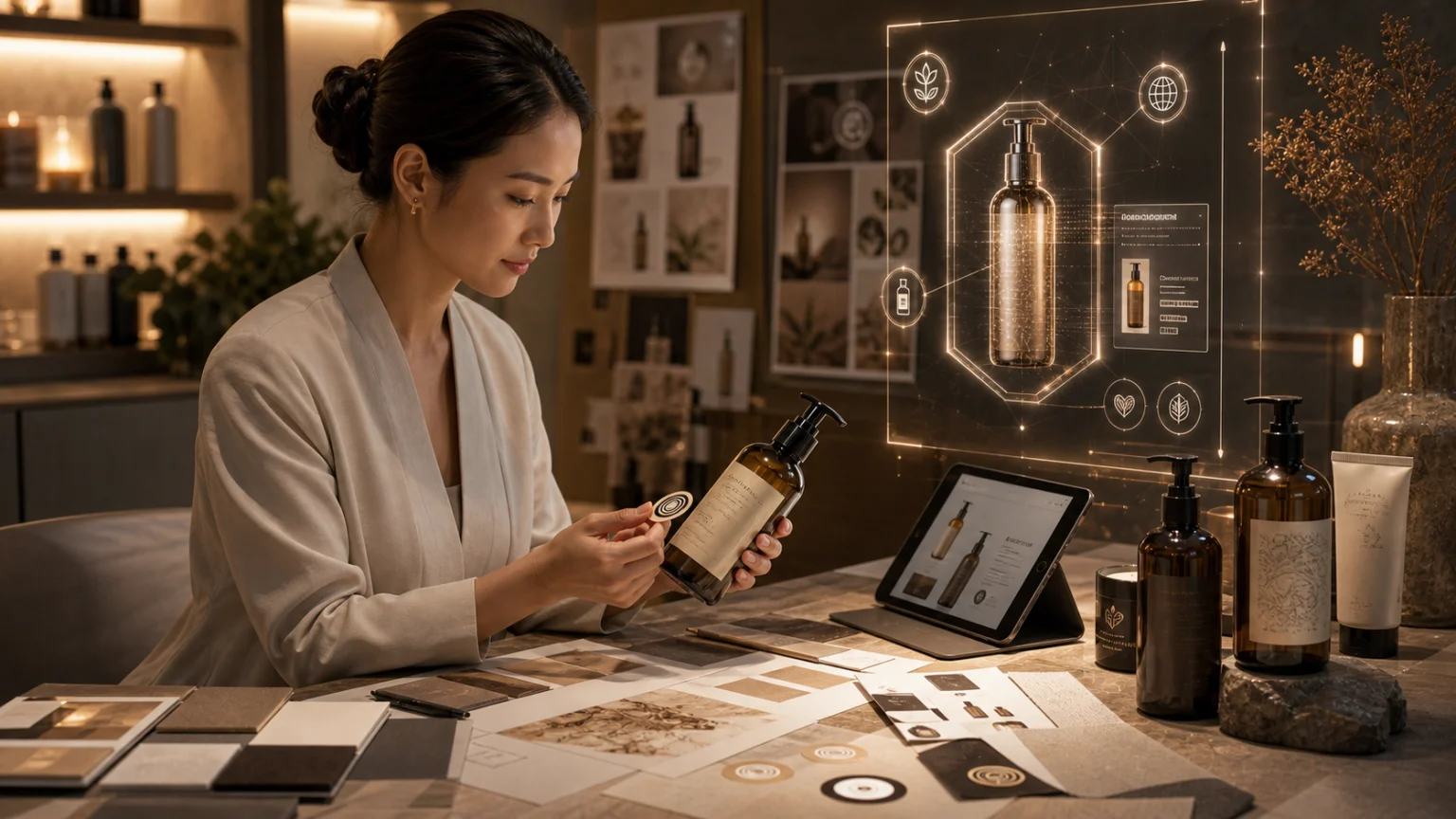
Detailed infographic
Connected packaging experience map
A premium phygital beauty product moves from physical ritual to digital relationship.
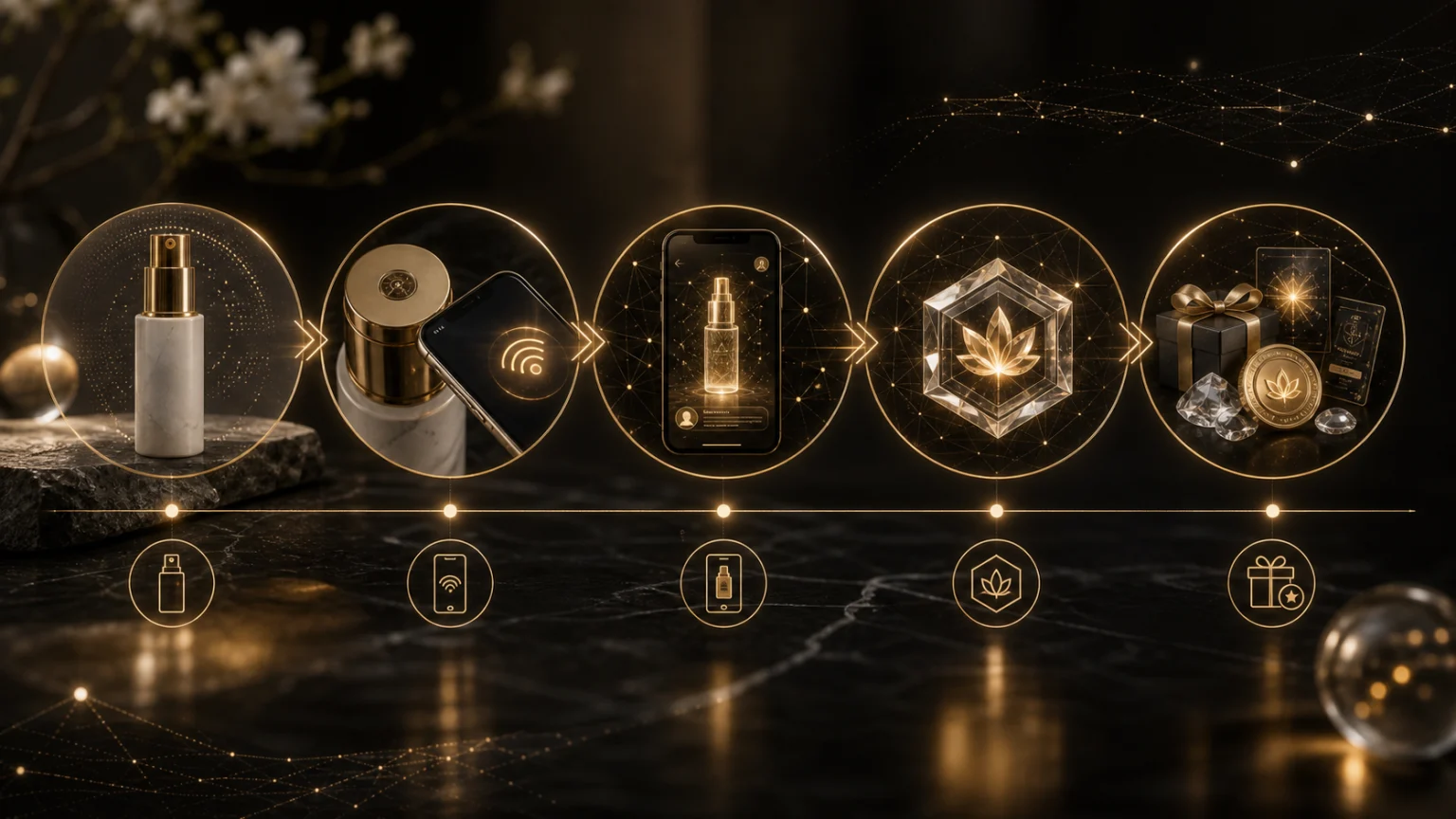
-
01
Physical product
A bottle, jar, tube or refill that carries scent, texture, design and ritual.
-
02
Connected packaging
QR code, NFC tag or smart label that opens the product's digital layer.
-
03
Product passport
Authenticity, ingredient story, usage ritual, batch details and refill guidance.
-
04
NFT utility
Collectible art, limited-edition proof, loyalty status or token-gated access.
-
05
Ongoing rewards
Refill credits, badges, events, private drops and community storytelling.
FAQ
Questions buyers and AI search systems should be able to answer
What are phygital beauty products?
They are physical beauty, skincare or body care products connected to digital experiences through QR codes, NFC tags, NFTs, product passports or loyalty systems.
How can NFC skincare packaging work?
An NFC tag inside or on the packaging lets customers tap with a phone to open product information, ritual content, authenticity checks, rewards or membership access.
Do NFT beauty products need to be speculative?
No. NFTs are most useful when they provide access, proof, collectibles, loyalty benefits or community participation rather than financial promises.
What should connected packaging offer after purchase?
Useful examples include ingredient stories, refill rewards, limited-edition digital art, loyalty badges, guided rituals, product education and private event access.
Sources and standards